Byblos’ Hidden Traps: What No One Tells You About Its Specialty Souvenirs
You think buying souvenirs in Byblos is as easy as picking up a trinket by the sea? Think again. I learned the hard way—overpriced "authentic" crafts, misleading labels, and tourist traps disguised as local gems. This ancient port city offers incredible specialty products, from hand-pressed olive oil to Phoenician-inspired pottery. But without the right know-how, your dream memento could turn into a regretful rip-off. Let’s walk through the real story behind Byblos’ most loved—and least understood—local treasures.
The Allure of Byblos: More Than Just a Pretty Harbor
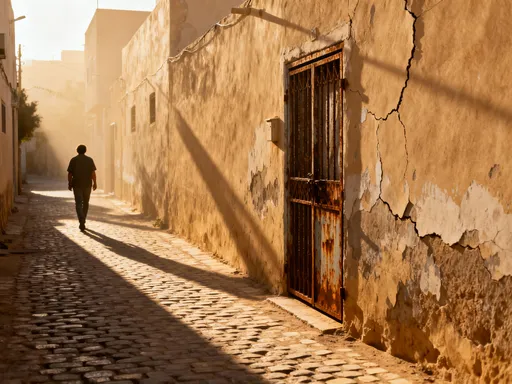
Byblos, known locally as Jbeil, is one of the oldest continuously inhabited cities in the world, with a history stretching back more than 7,000 years. Nestled along Lebanon’s Mediterranean coast, this UNESCO World Heritage Site is a living tapestry of civilizations—Phoenician, Roman, Crusader, and Ottoman layers resting beneath its sunlit stones. Visitors are drawn not only to its archaeological wonders, like the ancient citadel perched above the sea, but also to its cobblestone alleys lined with art galleries, spice stalls, and family-run boutiques. The scent of thyme and olive wood drifts through the air, mingling with the salt breeze as fishermen mend nets just steps from thousand-year-old ruins.
What makes Byblos especially enchanting is how history feels alive rather than frozen. Children play near Phoenician tombs; elders sip tea in cafes built into medieval walls. This continuity extends to its crafts, where age-old traditions are still practiced by artisans who view their work as both livelihood and legacy. Travelers often come seeking more than postcards or keychains—they want something meaningful, something that carries the soul of the place. That desire fuels the demand for specialty souvenirs: items believed to be handmade, locally sourced, and culturally significant. Yet, beneath this charm lies a market where authenticity is not always guaranteed.
The city’s reputation as a cultural shopping destination has grown steadily, especially in recent years as Lebanon promotes heritage tourism. Boutique stores and open-air markets offer a dazzling array of goods—hand-thrown ceramics, embroidered linens, jars of golden olive oil, and spice blends wrapped in hand-stamped paper. These items are marketed as authentic representations of Lebanese tradition, promising a tangible connection to the past. But as demand increases, so does the risk of encountering products that look local but aren’t truly rooted in the community.
Understanding the real value of Byblos’ souvenirs begins with recognizing the city’s unique position at the crossroads of history and modern tourism. The same charm that draws visitors also creates pressure on local markets to meet tourist expectations—sometimes at the expense of truth. To protect both your budget and the integrity of your travel memories, it’s essential to look beyond the surface and learn how to distinguish genuine craftsmanship from clever imitation.
What Makes a Product "Specialty" in Byblos?
A true specialty product from Byblos is more than just a pretty object—it’s a piece of cultural heritage expressed through craft. These items are typically made by hand using traditional methods passed down through generations. They are produced locally, often in small batches, using materials sourced from the surrounding region. Most importantly, they carry symbolic meaning, whether through design, function, or historical inspiration. For example, pottery painted with maritime motifs echoes the city’s Phoenician seafaring legacy, while textiles embroidered with geometric patterns reflect ancestral village aesthetics.
One of the most celebrated specialty products is extra virgin olive oil pressed from olives grown in the hills surrounding Jbeil. These groves have been cultivated for centuries, and many families still use stone mills to extract the oil, preserving its rich flavor and nutritional quality. Another hallmark is handmade za’atar—a blend of wild thyme, sumac, sesame seeds, and salt—often prepared in village homes and sold in reusable cloth pouches. Unlike supermarket versions, authentic za’atar varies slightly from batch to batch, reflecting the terroir and personal touch of the maker.
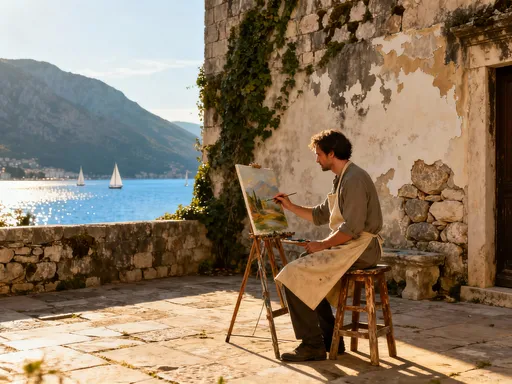
Textiles are another area of distinction. Some women’s cooperatives in nearby villages weave linen using old looms, creating table runners, napkins, and scarves adorned with traditional motifs. These pieces are not mass-produced; each stitch tells a story of patience and pride. Similarly, ceramic workshops in Byblos sometimes recreate designs based on archaeological finds, using clay from local deposits and natural pigments for glazing. When done ethically, these reproductions honor the past rather than exploit it.
What sets these items apart from generic souvenirs is the presence of three key elements: origin, process, and people. A specialty product should be made in or near Byblos, using time-honored techniques, and ideally involve direct participation by local artisans. Labels that say "inspired by" or "in the style of" are acceptable, as long as they don’t falsely claim ancient provenance or handmade status. The challenge for travelers is that not all vendors adhere to these standards, and the line between authentic and artificial can be deliberately blurred.
Pitfall #1: The Fake "Local" Label
One of the most common issues travelers face in Byblos is the misleading use of the "local" label. It’s not unusual to see signs boasting "handmade in Byblos" next to items that were actually manufactured in factories hundreds of miles away. These goods are often imported from countries with lower production costs and repackaged to look artisanal. The packaging might feature rustic fonts, images of olive trees, or Phoenician symbols, all designed to evoke a sense of authenticity—even when none exists.
For instance, some ceramic pieces sold near the harbor bear the mark of uniformity—identical shapes, perfectly symmetrical patterns, and synthetic glazes that lack the subtle variations of true handcrafting. Real handmade pottery will show slight irregularities: uneven rims, small bubbles in the glaze, or fingerprints in the clay. These imperfections are not flaws—they are proof of human touch. When every piece looks exactly the same, it’s a strong indicator of industrial production.
Another red flag is the absence of information about the maker. Authentic crafts often come with a story—either written on a tag or shared verbally by the seller. You might hear, "This oil comes from my uncle’s grove in Bchaaleh," or "My grandmother taught me this embroidery pattern." Generic claims like "local artisan" without names, locations, or production details should raise suspicion. If the vendor cannot explain where the item was made or who made it, it’s likely not as local as advertised.
To avoid being misled, ask specific questions. Inquire about the village where the olive oil was pressed, the name of the cooperative that wove the fabric, or the method used to create the ceramic design. Most genuine artisans are proud of their work and happy to share its origins. If the seller hesitates, changes the subject, or gives vague answers, consider taking your business elsewhere. Supporting real local makers means voting with your wallet for transparency and integrity.
Pitfall #2: Price Gouging in Tourist Zones
Location plays a major role in pricing, and nowhere is this more evident than in Byblos’ main tourist areas. Shops located within sight of the Crusader castle or along the bustling harbor promenade often charge significantly more for the same items found just a short walk away. This price inflation is not based on quality but on convenience and perception. Vendors in high-traffic zones know that many tourists have limited time, speak little Arabic, and prefer the ease of buying on the spot rather than exploring further.
Take olive oil as an example. A 500ml bottle labeled as "extra virgin, cold-pressed, from Byblos region" might cost $15 at a souvenir shop near the castle. Yet, the same quality oil—sometimes from the same producer—can be found for $6 to $8 at a village cooperative in the hills above Jbeil. The difference isn’t in the product but in the location and marketing. In tourist-centric stores, the price includes not just the oil, but the ambiance, the view, and the assumption that visitors are willing to pay a premium for a "perfect souvenir."
Spices, ceramics, and textiles follow a similar pattern. A hand-embroidered linen napkin sold for $25 near the harbor might be available for $12 at a women’s collective in a neighboring village. The markup in tourist zones can reach 100% or more, with little to no added value. While some travelers may accept this as the cost of convenience, others find it frustrating to realize they’ve overpaid simply for proximity to a landmark.
Language barriers and lack of price transparency also contribute to overcharging. Many small shops don’t display prices, leaving room for negotiation—or exploitation. A friendly smile and a quick calculation in another currency can mask an unfair deal. To protect yourself, carry a small conversion chart or use a currency app to check fair market values. More importantly, be willing to step off the main path. A 10-minute walk inland or uphill can lead to family-run farms, community stalls, and cooperatives where prices are fair and authenticity is guaranteed.
Pitfall #3: Confusing Replicas with Cultural Heritage
Another subtle but important issue involves the sale of replica artifacts—ceramic vessels, engraved stones, or jewelry designed to resemble ancient Phoenician or Roman relics. While some of these items are created responsibly as educational tools or artistic tributes, others cross ethical boundaries by mimicking protected archaeological designs or implying false historical value. The problem arises when tourists are led to believe they are purchasing a piece of ancient history, when in fact, it’s a modern imitation with no cultural authorization.
Lebanon has strict laws protecting its archaeological heritage, and it is illegal to sell genuine antiquities without proper documentation. However, there is no such restriction on replicas, which opens the door for misleading marketing. Some vendors describe ceramic bowls as "recovered designs" or "exact copies of museum pieces," creating the impression of rarity and historical significance. Without proper context, buyers may unknowingly support the commodification of sacred cultural symbols.
The ethical concern lies not in making reproductions, but in how they are presented and used. When artisans work with archaeologists or cultural institutions to create accurate, respectful replicas—complete with educational cards explaining their origin—the result can be both beautiful and meaningful. These pieces serve as bridges between past and present, helping to keep history alive. But when the same motifs are mass-produced without credit or context, it risks reducing cultural heritage to a decorative trend.
Travelers can make a difference by supporting studios that operate transparently. Look for workshops that name their inspirations, collaborate with local historians, or donate a portion of proceeds to heritage preservation. Ask whether the design is based on a specific archaeological find and if permission was granted to reproduce it. Responsible artisans will welcome these questions and provide clear answers. By choosing replicas made with respect, you help ensure that cultural appreciation does not become cultural appropriation.
How to Shop Smarter: A Practical Guide
Shopping wisely in Byblos doesn’t require expert knowledge—just a bit of preparation and awareness. Start before your trip by researching local cooperatives, artisan collectives, and farm-to-table producers in the Jbeil region. Many have websites or social media pages that showcase their work and values. This background knowledge helps you recognize authentic vendors and avoid those relying on tourist clichés.
Once in Byblos, prioritize visiting community-supported spaces. The Women’s Program Association in nearby towns often runs craft fairs featuring hand-embroidered textiles, natural soaps, and homemade preserves. These events are usually held in village centers or churches and offer direct interaction with makers. Similarly, agricultural cooperatives in the mountains above Byblos sell olive oil, honey, and za’atar at fair prices, often allowing visitors to tour the production area and see how items are made.
Look for signs of craftsmanship: tools on display, raw materials visible, or artisans working on-site. A store that lets you watch a potter shape clay or a woman grind spices by hand is far more likely to sell genuine products. Whenever possible, test the item—taste the olive oil, smell the za’atar, feel the texture of the fabric. Authentic goods have depth and character that mass-produced versions lack.
Don’t hesitate to engage in conversation. Even with limited language skills, a smile and simple questions can build connection. Ask, "Who made this?" or "Where does this come from?" Most local artisans appreciate the interest and will share details about their process. If a vendor avoids the question or seems uncomfortable, it’s a sign to keep looking. Remember, shopping is not just a transaction—it’s an opportunity for cultural exchange.
Why Your Choices Matter: Supporting Real Lebanese Craft
Every purchase you make in Byblos has ripple effects beyond the moment. When you buy from a family-run workshop or a rural cooperative, your money supports real people—often women, elders, or young entrepreneurs keeping traditions alive. These artisans rely on fair trade and ethical tourism to sustain their livelihoods in an economy where industrial imports threaten local production.
Supporting authentic craft helps preserve skills that might otherwise disappear. Hand-spinning linen, pressing olive oil with stone mills, or carving Phoenician-inspired designs are not just techniques—they are expressions of identity. As global markets favor speed and uniformity, small-scale artisans face increasing pressure to cut corners or abandon their work altogether. By choosing quality over convenience, you help create demand for slow, thoughtful production.
Moreover, mindful shopping strengthens rural communities. Many raw materials—olives, thyme, clay—are sourced from the surrounding countryside. When artisans thrive, so do farmers, foragers, and suppliers. This interconnected economy sustains not only jobs but also environmental stewardship, as traditional methods often align with sustainable practices.
There is also a cultural dimension. Lebanon’s heritage is rich but vulnerable. Years of conflict and economic instability have strained efforts to preserve historical knowledge. By supporting ethical artisans, travelers become allies in cultural resilience. You’re not just buying a souvenir—you’re helping to keep a legacy alive. And increasingly, young Lebanese are revitalizing old crafts with modern designs, blending tradition with innovation in ways that honor the past while appealing to new generations.
Conclusion: Souvenirs That Tell the True Story
Shopping for souvenirs in Byblos should be more than a checklist item at the end of a sightseeing tour. It’s a chance to deepen your connection to a place that has stood at the crossroads of civilizations for millennia. The items you bring home can be more than decorations—they can be storytellers, each carrying the imprint of human hands, ancestral knowledge, and cultural pride.
Avoiding the hidden traps of misleading labels, inflated prices, and unethical replicas isn’t about distrust. It’s about respect—for the artisans, for the culture, and for the truth of your travel experience. When you take the time to seek out authentic craftsmanship, you transform a simple purchase into an act of preservation.
The next time you hold a jar of olive oil from a Jbeil hillside grove or drape a hand-embroidered linen cloth over your table, you’re not just remembering a trip. You’re honoring a tradition. You’re sustaining a community. You’re ensuring that the soul of Byblos continues to thrive—one thoughtful choice at a time. Choose wisely, travel thoughtfully, and let your memories have roots.