Wandering Through Time: Eilat’s Hidden Architectural Soul
You know what I didn’t expect in Eilat? A story told through walls, colors, and sun-bleached rooftops. Forget just beaches and reefs—this desert-meets-sea city whispers its history through quiet alleyways and forgotten buildings. Slowing down revealed more than sights; it uncovered soul. The real magic isn’t in the resorts, but in the quiet corners where architecture speaks of eras gone by. This is travel with depth, one step at a time.
Reimagining Eilat: Beyond the Postcard
When most travelers think of Eilat, they picture golden sands, turquoise waters, and rows of sun loungers stretching along the shoreline. It’s a destination celebrated for diving in the Red Sea, snorkeling among coral gardens, and unwinding in luxury resorts. Yet beneath this polished surface lies a quieter, less-photographed truth—one of narrow streets, weathered facades, and homes that have stood for decades, bearing witness to the city’s evolution. Eilat is often dismissed as a modern resort with little historical depth, but this perception overlooks the subtle layers embedded in its urban fabric.
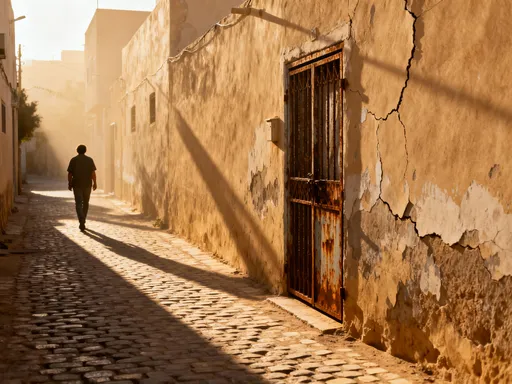
Arriving by car or bus, the first impression is undeniably contemporary. Wide boulevards, shopping centers, and high-rise hotels dominate the skyline. The city seems designed for efficiency and comfort, built quickly to accommodate waves of visitors seeking sun and sea. But venture beyond the main roads, turn down a side street, and something shifts. The rhythm slows. The noise fades. You begin to notice details: a wrought-iron gate shaped like desert palms, a courtyard shaded by a tamarisk tree, a building with peeling paint that reveals layers of past colors. These are not landmarks on any official map, yet they tell a story more personal and enduring than any brochure.
What emerges is a different kind of beauty—one rooted in authenticity rather than perfection. Eilat was founded in the 1950s as a remote outpost, a small settlement at the southernmost tip of Israel, where the Negev Desert meets the Red Sea. Its early architecture was shaped by necessity: simple, functional, and built to endure extreme heat and isolation. Over time, as tourism grew, so did the city’s skyline, but traces of that original spirit remain. To see them, you must be willing to look closely, to walk without a checklist, and to appreciate the poetry of ordinary places.
The Language of Buildings: Decoding Eilat’s Architectural Styles
Architecture is more than shelter; it is a response to environment, culture, and time. In Eilat, this response is written clearly in the design of its buildings. The city’s structures reflect a blend of practical adaptation and regional identity, shaped by the desert climate and the nation’s architectural trends over the past seventy years. Understanding these influences allows visitors to read the city like a book, each neighborhood a different chapter in its story.
One of the most consistent features across Eilat’s older buildings is the use of white stucco exteriors. This isn’t merely aesthetic—it’s functional. The light color reflects the intense desert sun, helping to keep interiors cooler. Flat roofs are another hallmark, minimizing surface area exposed to heat and often used as outdoor living spaces during cooler evenings. Small windows, sometimes fitted with metal grilles or wooden shutters, reduce direct sunlight while allowing for ventilation. Balconies are frequently recessed or shaded by overhangs, creating pockets of shade where residents can sit without stepping into the glare.
These design choices echo mid-century Israeli functionalism, a style that prioritized simplicity, affordability, and climate responsiveness. In the 1950s and 60s, architects across Israel developed what became known as desert architecture—modest, low-rise buildings that blended into the arid landscape. Eilat’s early housing projects followed this model, using locally available materials and straightforward construction methods. The result was a built environment that felt unpretentious and grounded, designed for living rather than display.
As the city expanded in the 1980s and 90s, new influences emerged. Mediterranean elements—such as arched doorways, tiled roofs, and decorative ironwork—began to appear, especially in tourist zones. These features added charm but were often more symbolic than functional, evoking a coastal aesthetic rather than responding directly to the desert. Meanwhile, modern high-rises built for tourism introduced glass facades and sleek lines, prioritizing views and luxury over thermal efficiency. While visually striking, these buildings sometimes stand in contrast to the city’s original architectural language, raising questions about continuity and identity.
A Walk Through Neve Noy: Where History Lives in Concrete
Neve Noy, one of Eilat’s earliest residential neighborhoods, offers a rare glimpse into the city’s origins. Established in the 1960s, it was among the first planned communities for government workers, military personnel, and families drawn to this remote frontier. Today, it remains a quiet enclave, shielded from the commercial bustle of the waterfront. Walking through Neve Noy feels like stepping into a different era—one defined by modesty, community, and resilience.
The streets are lined with single-story and two-story homes, many still occupied by original residents or their descendants. The buildings are simple: rectangular forms, flat roofs, and minimal ornamentation. Fences are often made of concrete blocks or recycled metal, topped with hand-painted details. Some homes feature small front gardens where desert-adapted plants—like agave, aloe, and prickly pear—thrive with little water. Clotheslines stretch between balconies, and children’s bicycles rest against walls, signs of daily life unfolding at a gentle pace.
What stands out most is the wear and tear—walls with faded paint, cracks sealed with care, gates slightly askew from years of use. These are not signs of neglect, but of endurance. Each imperfection tells a story: a home weathered by decades of sun and wind, a family that has stayed through changes in the city around them. One elderly woman, sitting outside her home with a cup of tea, shared how her family moved here when Eilat was little more than a few dozen houses and a dirt road. “We had no air conditioning,” she said with a smile. “But we had stars—so many stars you could read by them.”
Neve Noy embodies the original spirit of Eilat: a place built not for spectacle, but for living. It lacks the polish of newer districts, but it possesses something rarer—authenticity. The neighborhood’s layout encourages interaction: short blocks, shared courtyards, and benches placed at intersections. There’s a sense of continuity, of time moving slowly enough to leave its mark. For travelers seeking connection, Neve Noy offers a quiet invitation: to pause, to listen, and to appreciate the dignity of ordinary places.
The Waterfront Paradox: Modern Glamour vs. Authentic Character
The northern and central waterfront of Eilat presents a striking contrast to neighborhoods like Neve Noy. Here, the city reveals its modern face: a marina dotted with yachts, promenades lined with cafes, and hotels with glass-fronted lobbies and infinity pools. This is Eilat as a destination of leisure and indulgence, designed to attract visitors with comfort and convenience. The architecture is sleek, often imported in style, drawing inspiration from Mediterranean resorts and international luxury brands.
There’s no denying the appeal of this side of the city. The marina area is lively, well-maintained, and scenic, especially at sunset when the water glows pink and gold. Restaurants serve fresh seafood, musicians play in the evenings, and families stroll along the boardwalk. But beneath the charm lies a tension—a quiet erasure of the city’s local character in favor of a more generic, tourist-friendly image. Many of the buildings here could belong to any coastal resort in the Mediterranean or the Caribbean. The sense of place, so strong in older neighborhoods, becomes diluted.
Some newer developments have attempted to incorporate regional elements—using stone cladding, desert-toned paints, or shaded walkways—but these often feel like aesthetic choices rather than deep design responses. The result is a kind of architectural mimicry: buildings that look like they belong to the desert but don’t fully engage with it. Air-conditioned interiors remain sealed off from the outside, balconies are too small for real use, and public spaces prioritize appearance over interaction.
Yet not all is lost. Scattered along the edges of the tourist zones, small pockets of authenticity endure. A family-run bakery with a faded sign, a dive shop operating from a converted garage, a community center with peeling murals—these places resist homogenization. They remind visitors that Eilat is not just a resort, but a living city with its own rhythms and residents. The challenge for the future is balancing growth with preservation, ensuring that development enhances rather than erases the city’s unique identity.
Hidden Gems: Finding the Unseen Details
The true joy of exploring Eilat’s architecture comes not from grand monuments, but from the small, easily overlooked details. These are the elements that reveal personal stories, cultural influences, and moments of creativity. They require no admission fee, no guided tour—only attention. A slow walk through the city’s side streets uncovers a hidden gallery of everyday artistry.
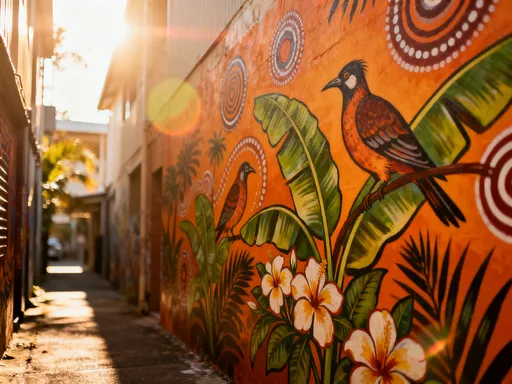
On a quiet block near the old market, a set of concrete stairs catches the eye—not for their structure, but for the mosaic tiles embedded in each riser. Blue, green, and gold fragments form geometric patterns, catching the light as you climb. Nearby, a courtyard gate is adorned with a hand-forged metal design of a desert fox, a nod to the wildlife that once roamed freely here. In another alley, a crumbling wall is partially covered in a mural of coral and fish, painted decades ago by local schoolchildren. These are not tourist attractions; they are acts of care, expressions of pride in a place that others might pass by without seeing.
Retro signage is another delight. Faded letters on a bakery window, a hand-painted “Open” sign on a repair shop, a neon light above a decades-old cinema—all speak of a slower pace of life, when businesses were run by families and signs were made by hand. Some of these places have closed, their windows boarded up, but the signs remain, like echoes of a past era. Others are still in use, their owners continuing traditions passed down through generations.
One afternoon, while photographing a row of old homes, a man stepped out of his door and asked what I was doing. When I explained I was interested in the architecture, his face lit up. “You’re the first person who’s ever noticed,” he said. He invited me to see his courtyard, where a grapevine shaded a stone table, and a fountain made from a repurposed oil drum bubbled softly. “We built this in 1978,” he said. “Everything here has a story.” That conversation, brief as it was, deepened the experience more than any guidebook could. It reminded me that architecture is not just about buildings—it’s about the lives lived within them.
The Rhythm of Slow Travel: How Pacing Changes Perception
Discovering Eilat’s architectural soul requires a shift in pace. It cannot be done in a day, nor from the window of a tour bus. It demands time, stillness, and presence. This is the essence of slow travel—not rushing from one attraction to the next, but allowing oneself to become immersed in the texture of a place. In a city like Eilat, where the natural beauty is so dominant, slowing down is an act of rebellion against the typical tourist rhythm.
Sitting on a bench in a quiet square for an hour reveals more than a guided tour. You begin to notice how light moves across walls—how the morning sun warms the eastern facades, how shadows lengthen in the afternoon, how the evening glow turns white stucco into gold. You hear the sounds of daily life: a door closing, a radio playing softly, children laughing in a nearby yard. You see how people use their spaces—how an old man waters his cactus every evening, how a woman hangs laundry with precise movements, how neighbors greet each other by name.
Returning to the same street at different times of day reveals its changing moods. In the morning, it’s quiet, bathed in cool light. By midday, it’s nearly empty, shuttered against the heat. In the late afternoon, life returns—shopkeepers open their doors, residents emerge, and the air fills with the smell of cooking. Each visit adds a layer to your understanding, building a fuller picture of the neighborhood’s rhythm.
Photography becomes a form of meditation. Instead of chasing the perfect shot, you focus on details: the texture of cracked paint, the pattern of a wrought-iron railing, the way a potted plant grows through a crack in the pavement. These images, when reviewed later, are not just visual records—they are emotional impressions, fragments of a deeper connection. Slow travel transforms sightseeing into a practice of mindfulness, where every step becomes an act of discovery.
Why This Matters: Preserving Identity in a Changing City
Eilat may be a young city by historical standards, but that does not mean it lacks heritage. Every building, every street, every handmade gate is part of a collective memory. These structures are not just functional—they are cultural artifacts, embodying the values, challenges, and creativity of those who built and lived in them. Preserving them is not about freezing the city in time, but about honoring its journey and ensuring that future generations can understand where it came from.
As tourism continues to shape Eilat’s development, there is a risk of losing the very qualities that make it unique. When every new building looks the same, when local businesses are replaced by chains, when neighborhoods are redeveloped without regard for their character, the city begins to lose its soul. Sustainable tourism should not only protect natural environments like coral reefs and desert reserves, but also cultural landscapes—the human-made places that tell the story of a community.
Travelers have a role to play in this. By choosing to explore beyond the resorts, by supporting local businesses, by engaging with residents and respecting their spaces, visitors can contribute to a more meaningful form of tourism. Looking closely at architecture is not just an aesthetic pursuit—it is an act of recognition. It says: I see you. I value your history. I am not just passing through.
Eilat’s soul is not in its postcard views, but in its quiet corners, its weathered walls, its handcrafted details. It is in the way sunlight falls on a courtyard at dusk, in the sound of a gate creaking open, in the memory of a city that began as a dream in the desert. To experience it, you need only slow down, look closer, and listen. Because every building has a story. And every story deserves to be heard.