Where Art Meets Paradise: Bora Bora’s Hidden Creative Escapes
You know that feeling when beauty stops you in your tracks? Bora Bora did that to me—not just with its turquoise lagoons, but through unexpected bursts of art woven into everyday island life. Forget crowded galleries; here, creativity lives in open-air studios, hand-carved canoes, and vibrant market murals. This is more than a vacation—it’s a soul-refreshing blend of leisure and artistic expression waiting to be explored. The island does not simply offer postcard views; it invites you to step inside the frame, to touch the textures, hear the rhythms, and contribute your own brushstroke to an ever-evolving masterpiece. In Bora Bora, art is not confined to walls or pedestals. It flows through the palms, echoes in the drums, and unfolds in the hands of those who live in harmony with their environment. To visit is to awaken a quiet creative spirit, long dormant beneath the routines of daily life.
The Canvas of the Island: How Bora Bora’s Landscape Inspires Art
Bora Bora is more than a tropical destination—it is a living canvas. The island’s dramatic geography, with its emerald peaks rising from sapphire waters, serves as a constant source of inspiration for artists near and far. Mount Otemanu, the island’s volcanic crown, stands as a silent guardian, its jagged silhouette shifting in hue from dawn to dusk. As sunlight dances across the lagoon, it transforms the water into a palette of blues and greens, a natural spectacle that no painter could fully replicate. This interplay of light and water has shaped the very essence of Polynesian artistic expression, where color is not just seen but felt, and form follows the rhythm of the sea.
The island’s natural elements do not merely surround art—they become art. Coral reefs, teeming with life and intricate patterns, inspire the geometric motifs found in traditional tapa cloth and woodcarving. The undulating movement of waves is echoed in the flowing lines of dance and the rhythmic beat of the to’ere drums. Even the wind, whispering through coconut palms, carries a melody that has shaped the island’s musical heritage. Artists who come to Bora Bora often speak of a deep resonance, a sense that the land itself is guiding their hands. The environment is not a backdrop but a collaborator, offering textures, sounds, and colors that are impossible to replicate elsewhere.
Recognizing this profound connection, local communities and cultural stewards have intentionally designed spaces where nature and creativity intersect. Scenic lookouts like Matira Point and the summit of Mount Pahia are not just for photography; they are informal studios where visitors and artists pause to sketch, journal, or simply absorb the visual symphony. Open-air installations, such as carved wooden totems placed along coastal paths, are positioned to frame specific views, creating a dialogue between human expression and the natural world. These are not afterthoughts but deliberate invitations to engage, to see the island not just with the eyes but through the lens of artistic interpretation.
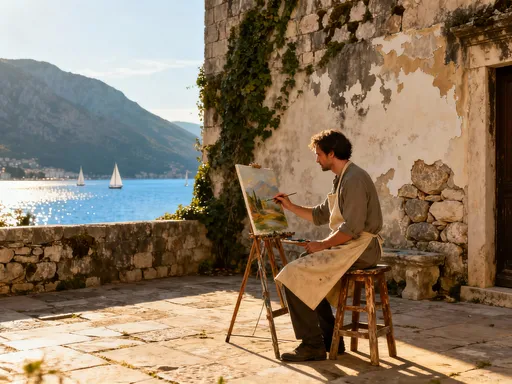
Even the architecture reflects this harmony. Traditional fare, or open-sided pavilions, are built with natural materials and oriented to capture the best light and breeze, functioning as both shelter and creative space. Many artists work outdoors, their tools laid out on woven mats, their canvases propped against palm trunks. The absence of rigid studio walls allows inspiration to flow freely, unconfined by structure. In Bora Bora, art is not something you make in isolation—it emerges from immersion, from being fully present in a place where every element sings with creative potential.
Leisure Reimagined: Art-Centric Spots Where You Can Unwind and Create
In Bora Bora, leisure is not passive. It is an invitation to participate, to slow down and rediscover the joy of making. Across the island, a new kind of retreat has emerged—spaces where relaxation and creativity are not separate pursuits but intertwined. Lagoon-side cultural lounges offer a serene setting for guests to explore traditional crafts without pressure or expectation. These are not rigid workshops with strict outcomes, but gentle introductions to the island’s artistic heritage. Here, time moves differently. There is no rush to finish, no need for perfection. The act of creation itself becomes the reward.
At many resorts, guided art experiences are seamlessly woven into the guest experience. You might find yourself seated beneath a thatched roof, surrounded by the scent of frangipani, learning to weave pandanus leaves into a small fan or bracelet. The process is meditative, each fold and twist requiring focus and patience. Instructors, often local artisans, share not just techniques but stories—of how their grandmothers taught them, of the significance of patterns, of the pride in preserving a craft that has been passed down for generations. These moments are not performances for tourists; they are genuine exchanges, a quiet passing of knowledge from one hand to another.
Painting sessions are equally accessible. With watercolors in hand, guests are encouraged to capture the lagoon’s ever-changing light. Some paint from memory, others from the view before them. The emphasis is not on realism but on expression. One woman, a retired teacher from Australia, described how, after years of grading papers, it felt liberating to make something with no right or wrong answer. “I didn’t realize how much I needed this,” she said, holding up a painting of overlapping blues and soft pinks. “It’s like I’m relearning how to play.”
Another popular offering is the introduction to traditional tattoo art, or tatau. While full-body tattoos are reserved for those with deep cultural ties, visitors can learn about the symbolism and even create their own symbolic designs on paper. These sessions often include discussions about identity, heritage, and the sacredness of body art in Polynesian culture. The experience is respectful and educational, emphasizing the importance of understanding before imitation. For many, it becomes a moment of introspection, a chance to reflect on personal journeys and values.
What makes these creative leisure activities so powerful is their pace. There is no agenda, no product to sell, no deadline. The rhythm is slow, deliberate, almost prayerful. In a world that glorifies speed and productivity, Bora Bora offers a different kind of luxury—the luxury of time, of presence, of making something simply because it feels good. This is leisure redefined: not as escape, but as reconnection—with culture, with nature, and with oneself.
Beyond the Resort: Discovering Local Art Villages and Community Hubs
While resort-based experiences offer comfort and accessibility, the heart of Bora Bora’s artistic soul beats strongest in its villages. Away from the polished marinas and overwater bungalows, small community hubs serve as gathering places for artisans and cultural keepers. These are not tourist traps but living centers of tradition, where craft is not a performance but a way of life. The fare potee, a communal meeting house found in many Polynesian villages, often doubles as a workspace where elders teach younger generations the intricacies of woodcarving, weaving, and dyeing.
In the village of Vaitape, the island’s main settlement, a modest craft market lines the waterfront. Here, artisans display hand-carved tikis, woven baskets, and tapa cloth dyed with natural pigments. Unlike mass-produced souvenirs, each piece tells a story. A wooden bowl might be carved from miro wood, shaped with tools passed down through decades. A necklace could be strung with black pearls harvested from the lagoon, set in a setting designed to honor their organic form. Visitors are welcome to watch, ask questions, and even try their hand at simple techniques under patient guidance.
One elder, a master woodcarver named Tefana, has spent over fifty years shaping wood into art. Seated outside his home, surrounded by half-finished sculptures, he explains that each piece begins with a conversation—with the wood, with his ancestors, with the purpose it will serve. “I don’t force the shape,” he says. “I listen to what the tree wants to become.” His hands, weathered and strong, move with precision, revealing a lifetime of dedication. For him, carving is not a job but a spiritual practice, a way of maintaining balance between human and nature.
Other artisans specialize in fabric work. Women in the village of Anau gather to create tapa cloth, a labor-intensive process that begins with the inner bark of the paper mulberry tree. The bark is soaked, beaten, and layered into sheets, then decorated with natural dyes made from roots, leaves, and clay. The patterns are not random; they carry meanings tied to family, history, and the environment. Participating in even a small part of this process—helping to pound the fibers or trace a simple motif—creates a deep sense of connection.
Instrument makers also play a vital role. The sounds of Bora Bora are shaped by craftsmen who build traditional drums, nose flutes, and stringed instruments from local materials. A visit to a small workshop might include a demonstration of how a to’ere drum is hollowed from a single log, then tuned by the thickness of its walls. Guests are often invited to try playing, feeling the vibration in their hands, experiencing how music and craftsmanship are inseparable.
These community hubs are not designed for mass tourism. They operate on island time, opening when people gather, closing when the sun sets. There is no admission fee, no scripted tour. Interaction is organic, rooted in mutual respect. For the visitor, this is not just sightseeing—it is witnessing culture in its most authentic form. And in that witnessing, there is a quiet transformation: a reminder that art, at its core, is about community, continuity, and the enduring power of human hands.
Floating Galleries: Unique Venues on the Water
In Bora Bora, art does not stay on land. It floats, suspended above the lagoon, cradled by the same waters that inspire it. A growing number of creative initiatives have transformed the island’s aquatic landscape into a series of floating galleries—mobile, ephemeral, and breathtaking. Overwater bungalows, already iconic symbols of luxury, are being reimagined as temporary exhibition spaces, where paintings, sculptures, and textiles are displayed in harmony with their surroundings. The effect is surreal: art reflected in water, framed by sky, experienced in a state of gentle motion.
Some resorts have partnered with local and international artists to curate rotating exhibits in these unique venues. A guest might step into a bungalow to find the walls adorned with large-scale canvases depicting underwater scenes, the colors mirroring the reef below. Or they might discover a sculptural installation made from reclaimed coral and driftwood, positioned to sway slightly with the tide. These spaces are not static; they change with the light, the weather, the mood of the water. Viewing art here is not a detached act but an immersive one, where the senses are fully engaged.
Even boats have become mobile studios. Certain cultural tours include a stop at a moored vessel where an artist-in-residence works and displays their creations. Visitors board quietly, stepping into a floating atelier where the sound of waves replaces silence. One such artist, a painter from Tahiti, describes how the movement of the boat influences her brushstrokes. “The rocking keeps me from overthinking,” she says. “It’s like the ocean is guiding my hand.” Her abstract works, layered with blues and golds, seem to capture the very essence of the lagoon.
These aquatic exhibitions are more than aesthetic experiments—they are statements about connection. By placing art on the water, curators emphasize the inseparability of creativity and environment. There is no barrier between the artwork and the world that inspired it. A sculpture of a manta ray hangs near a spot where real mantas glide beneath the surface. A painting of the sunrise is displayed just as dawn breaks over the horizon. The timing is intentional, designed to deepen the emotional resonance of the experience.
For visitors, the impact is profound. Standing on a floating platform, surrounded by water and art, there is a sense of suspension—not just physical, but emotional. The usual boundaries between observer and creator, land and sea, begin to dissolve. In these moments, art is not something to be consumed but something to be felt, a living presence that moves with the pulse of the island. It is a reminder that beauty is not static; it flows, shifts, and evolves, just like the tides.
Art in Motion: Dance, Music, and Performance as Leisure Expression
If visual art is the island’s silent language, then dance and music are its voice. In Bora Bora, performance is not entertainment—it is expression, history, and communal joy rolled into one. The traditional ōte’a, a dynamic drum dance performed by men, tells stories of war, navigation, and mythology through sharp, powerful movements. The aparima, a more lyrical dance performed by women, uses hand gestures to narrate legends, love, and daily life. These are not staged for tourists; they are living traditions, taught in schools, performed at festivals, and cherished as part of cultural identity.
Evening cultural shows at resorts often begin as observations but evolve into participatory experiences. Guests are invited to try the basic steps, to feel the rhythm of the pahu drum in their chest, to mimic the hand motions of the aparima. Instructors encourage laughter, not perfection. “It’s not about getting it right,” says a dance teacher named Hina. “It’s about feeling the story in your body.” For many visitors, especially women in their 30s to 50s, this is a rare opportunity to move freely, to reconnect with their bodies in a joyful, non-judgmental space.
Music, too, is accessible. Ukulele lessons are a common offering, introducing guests to simple Polynesian melodies. The instrument’s gentle sound, paired with lyrics in Tahitian, creates an immediate sense of place. Some resorts host informal jam sessions, where guests and staff play together under the stars. There is no audience, no stage—just people making music in the moment. These gatherings often end with shared songs, laughter, and a quiet sense of unity.
For many women, especially those who have spent years managing households and careers, these creative movements are deeply restorative. Dancing is not exercise; it is release. Drumming is not performance; it is catharsis. The rhythmic repetition, the communal energy, the connection to ancient traditions—these elements combine to create a form of emotional healing. One guest, a mother of three from Canada, described how dancing under the moonlight made her feel “visible again, not just as a caregiver, but as a person with joy inside.”
These performances are not endpoints but invitations. They remind us that art is not only to be seen or owned but to be lived. In Bora Bora, creativity is not confined to the studio or the gallery. It is in the sway of hips, the beat of drums, the shared song at dusk. It is a reminder that we are all capable of expression, that movement itself can be a form of beauty, and that joy is a language everyone can speak.
Designing Your Art-Focused Itinerary: Practical Tips for an Inspired Journey
To fully embrace Bora Bora’s artistic spirit, a little planning goes a long way. The key is to balance structure with openness, allowing room for both guided experiences and spontaneous inspiration. Begin by selecting accommodations that prioritize cultural access. Some resorts offer dedicated cultural programs, including daily workshops, artist meetups, and private excursions to local villages. Look for properties that collaborate with local artisans or host rotating art exhibitions. These details signal a commitment to authentic engagement rather than superficial tourism.
Timing your visit can also enhance your experience. While Bora Bora is beautiful year-round, certain months bring cultural festivals that showcase the island’s creative energy. Heiva i Bora Bora, typically held in July, is a vibrant celebration of dance, music, and craft. During this time, the entire island comes alive with performances, competitions, and community events. Even if you don’t attend the festival itself, the atmosphere is charged with artistic pride. Alternatively, inquire about artist-in-residence programs, which offer rare opportunities to meet creators, see their process, and even commission custom pieces.
When planning activities, mix guided sessions with free time. Schedule a weaving workshop or a painting class, but also leave mornings open for quiet reflection by the lagoon. Inspiration often strikes in stillness. Consider a lagoon cruise not just for snorkeling but for sketching or journaling. Bring a small art kit—watercolors, a notebook, colored pencils—and use it not to create masterpieces but to capture feelings. These personal mementos often become the most cherished souvenirs.
Engage with the local community respectfully. Visit the Vaitape market early in the morning, when artisans are setting up. Ask permission before taking photos. If invited to a village event, accept with gratitude and follow local customs. These small acts of respect open doors to deeper connections. Remember, you are a guest in a living culture, not a consumer of it.
Finally, let go of expectations. Not every attempt at art will feel successful. That is not the point. The goal is presence, participation, and the willingness to be touched by beauty. Whether you carve a small tiki, dance offbeat, or simply watch the sunset with new eyes, you are engaging in the true art of travel—one that transforms not just your photographs, but your spirit.
Why This Matters: The Deeper Value of Art-Infused Travel
Traveling to Bora Bora for its art is not a luxury—it is a necessity of the soul. In a world that often reduces leisure to consumption, this island offers a different model: one where rest and creation are intertwined, where beauty is not just observed but co-created. The value of art-infused travel lies not in the souvenirs you bring home but in the internal shifts you carry forward. Studies in psychology have long shown that engaging in creative activities reduces stress, enhances emotional resilience, and fosters a sense of well-being. In Bora Bora, these benefits are amplified by the healing power of nature, community, and cultural authenticity.
When you weave a bracelet, you are not just making an object; you are connecting with generations of women who have passed down this skill. When you dance, you are not just moving your body; you are stepping into a lineage of storytelling and celebration. These experiences create memories that last far longer than sightseeing. They are not just recalled—they are felt, carried in the muscles, the heart, the breath.
Moreover, art-infused travel fosters cross-cultural appreciation. It moves beyond surface-level tourism, inviting genuine exchange. By learning from local artisans, visitors gain respect for the time, skill, and meaning behind each creation. This understanding combats cultural appropriation and promotes ethical engagement. It reminds us that traditions are not costumes but living practices, worthy of preservation and honor.
For women in midlife, this kind of travel can be especially transformative. It offers a space to pause, to explore identity beyond roles, to rediscover creativity that may have been set aside for years. In Bora Bora, there is no pressure to perform, no judgment for being a beginner. There is only invitation: to try, to feel, to be present. And in that presence, many find a quiet reawakening—a sense that they, too, are artists, capable of beauty and expression.
Bora Bora is not just a destination. It is a living canvas, always in motion, always inviting participation. To visit is not to take, but to give—to offer your attention, your hands, your heart. The island does not ask for perfection. It asks only that you show up, that you see with fresh eyes, that you allow yourself to be moved. And in return, it offers something rare: the chance to create not just art, but a deeper, more beautiful way of being.