You Won’t Believe What We Found in Kotor’s Hidden Art Corners
Tucked within Kotor’s ancient stone alleys and sun-drenched plazas are quiet pockets of creativity—small galleries, street murals, and artist studios that most tourists walk right past. I went searching for authentic art spaces in this Montenegrin gem and discovered something unexpected: not all that glitters is gold. Some spots dazzle with soul, while others feel more like tourist traps in disguise. This is a real talk about what to seek out—and what to skip. In a town where every cobblestone tells a story, the truest tales are often whispered through paintbrushes, carved into wood, or shared in quiet conversations with artists who call Kotor home.
The Allure of Kotor’s Art Scene
Kotor, nestled along Montenegro’s dramatic Adriatic coastline, has long drawn visitors with its medieval fortifications, sweeping bay views, and UNESCO-protected Old Town. But beyond the postcard-perfect panoramas, a quieter kind of beauty is emerging—one shaped by local hands and creative vision. Over the past decade, the town has quietly evolved into a cultural micro-hub, where centuries-old architecture frames contemporary expression. The blend of Venetian, Ottoman, and Slavic influences doesn’t just live in the stonework; it echoes in the palette of local artists who draw from this layered history to craft something uniquely their own.
What makes Kotor’s art scene particularly compelling is its intimacy. Unlike sprawling museums in major European capitals, the creative spaces here are often tucked into converted storage rooms, repurposed chapels, or sunlit corners of family homes. You might turn a narrow alley and find an open door revealing an easel, a potter’s wheel, or a hand-painted sign inviting you in. These moments of serendipity—stumbling upon a watercolorist capturing the morning light on the cathedral façade, or a sculptor chiseling limestone in a shaded courtyard—add depth to the travel experience. They transform sightseeing into connection.
Travelers today are increasingly seeking more than just landmarks. They want authenticity, meaning, and a sense of place that lingers beyond the photo album. Art offers that bridge. In Kotor, where tourism swells during summer months, the desire to engage with local culture has never been stronger. Yet, with opportunity comes challenge: not every art space is created equal. Some honor the spirit of Montenegrin creativity, while others prioritize profit over provenance. The key lies in knowing where—and how—to look.
What Makes a Genuine Art Space?
Distinguishing a meaningful art space from a commercial front requires attention to detail. Authenticity isn’t always obvious at first glance. A beautifully lit gallery with polished frames can still be filled with imported prints and generic themes. The true markers of a genuine creative venue lie in intention, transparency, and connection. First and foremost is originality. Does the work reflect a personal voice? Are the subjects drawn from local landscapes, traditions, or daily life? Or do they rely on clichéd motifs—endless seascapes with generic boats, stylized Balkan patterns with no cultural context—that could be replicated anywhere?
Equally important is artist representation. In authentic galleries, you’ll often find names, bios, or even the artists themselves present. There’s a willingness to engage, to explain the inspiration behind a piece, or to share the process of creating it. This openness fosters trust and enriches the viewing experience. Contrast this with spaces where no information is provided, prices are listed without explanation, and staff seem more focused on closing a sale than sharing a story. These are often red flags for mass-produced items masquerading as local art.
Another hallmark of authenticity is interaction. The best studios invite curiosity. They may offer demonstrations, allow visitors to try a brushstroke, or host small exhibitions featuring rotating local talent. Pricing, too, should feel fair and justified—not inflated to match the expectations of cruise passengers. A genuine art space doesn’t need to shout; it earns respect through consistency, quality, and respect for both the craft and the audience. When art is presented with humility and honesty, it resonates more deeply.
Must-Visit Authentic Studios and Galleries
Among the maze of souvenir shops and espresso bars in Kotor’s Old Town, several real art spaces stand out for their integrity and vision. One such gem is a small, family-run gallery tucked into a quiet courtyard just off the main square. The space, once a storage room for a 17th-century merchant house, now displays hand-painted ceramics and mixed-media works inspired by Montenegro’s mountain villages. The artists, a mother and daughter duo, often work on-site, allowing visitors to observe the delicate process of hand-glazing and firing. Their pieces incorporate traditional patterns but reinterpret them with modern color palettes, creating a dialogue between past and present.
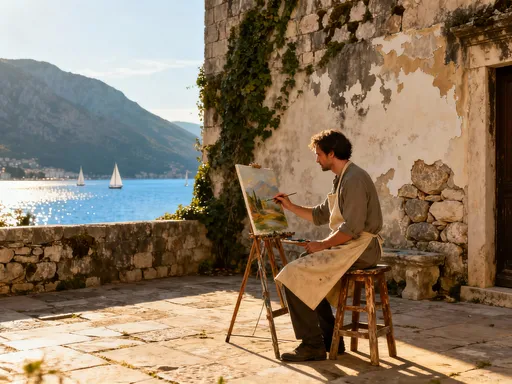
Another standout is an open-air studio perched on the edge of the old city walls, where a local painter specializes in oil landscapes of the Bay of Kotor. From his elevated workspace, he captures the shifting light across the water—golden at dawn, steel-blue at midday, rose-gold at sunset. What sets his work apart is not just technical skill, but deep familiarity with the terrain. He hikes the surrounding hills regularly, sketching en plein air, and his paintings reflect a true sense of place. Visitors are welcome to stop by in the late morning, when he’s most likely to be working, and many leave not just with a painting, but with a story about the hidden cove or abandoned chapel depicted in it.
Further along the waterfront, in a quieter district just beyond the main tourist flow, a collective of young artists runs a rotating exhibition space in a restored stone building. They focus on contemporary interpretations of Balkan folklore—reimagining traditional costumes through textile art, or using recycled materials to sculpt symbolic figures from regional myths. The space doubles as a community workshop, offering occasional beginner classes in printmaking and natural dyeing. Signage is modest, hours are posted on a chalkboard, and there’s no pressure to buy. Instead, the emphasis is on dialogue, education, and cultural preservation.
These spaces share a common thread: they are rooted in place, respectful of tradition, and open to engagement. They don’t demand attention—they invite it. For travelers seeking a deeper connection to Kotor, a visit to any of these studios offers not just aesthetic pleasure, but a meaningful encounter with the people who keep the region’s creative spirit alive.
Common Pitfalls: The Overpriced, Overhyped, and Out of Place
For every authentic studio, there are several that exploit the growing interest in local art without contributing to it. These spaces often occupy prime locations—corner spots near the main gate or along the busiest pedestrian routes—and rely on visual appeal to draw people in. Bright displays, elegant frames, and dramatic lighting create the illusion of quality. But closer inspection reveals a different story. Many of these galleries sell imported paintings, often from Southeast Asia or Eastern Europe, with little to no connection to Montenegro. The subjects may mimic local scenery, but the brushwork lacks nuance, and the colors feel artificial, as if designed by algorithm rather than emotion.
One recurring issue is the absence of artist information. In several such venues, no names are listed, no biographies provided, and no indication given about where or how the pieces were made. When asked, staff may offer vague answers like “local artist” or “family collection,” but avoid specifics. This lack of transparency is a major warning sign. True art spaces take pride in their creators; they want you to know who made what you’re seeing. When that connection is missing, so is authenticity.
Another red flag is pricing inconsistency. Some of these galleries list prices that are disproportionately high—hundreds of euros for small, unframed works with no provenance. The markup appears designed to capitalize on tourist impulse rather than artistic value. Additionally, the pressure to purchase can be intense, with staff hovering closely or offering “limited-time discounts” that feel more like sales tactics than genuine offers. These experiences can leave visitors feeling manipulated, and worse, they divert support away from the artists who truly need it.
Perhaps most damaging is the homogenization of culture. In these commercial spaces, “Balkan” becomes a vague aesthetic—red and black embroidery, stylized eagles, generic mountain scenes—stripped of meaning and context. It’s a performance of heritage rather than a celebration of it. When tourists buy these items, they may believe they’re supporting local culture, but in reality, they’re funding a system that undermines it. The result is a diluted artistic landscape, where genuine voices struggle to be heard over the noise of mass production.
How to Spot the Real Deal
Navigating Kotor’s art scene doesn’t require expert knowledge—just a bit of curiosity and awareness. The first step is to slow down. Authentic art spaces are rarely the most visible or the loudest. They don’t need neon signs or aggressive marketing. Instead, they rely on word of mouth, quiet signage, or the simple presence of an artist at work. A good rule of thumb is to look for signs of creation: paint-stained tables, tools in use, sketches pinned to the wall. If you see someone actively making art, you’re likely in the right place.
Engagement is another key indicator. Don’t hesitate to ask questions. Who is the artist? Where are they from? What inspires their work? In genuine spaces, these questions are welcomed, even expected. Many artists are eager to share their process, whether it’s the source of their pigments, the meaning behind a symbol, or the challenges of working in a historic building with limited space. These conversations add richness to the experience and help you make informed decisions about what to support.
Timing matters, too. Midweek mornings are often the best moments to visit studios, as many artists work during these hours and are more likely to be present. Weekends and cruise ship days bring larger crowds, which can lead to temporary closures or rushed interactions. Additionally, consider stepping beyond the main squares. Some of the most compelling work is found in residential areas, side alleys, or newer neighborhoods just outside the city walls. A short walk from the marina, for instance, leads to a cluster of converted workshops where painters, potters, and metalworkers collaborate in shared spaces.
Finally, trust your instincts. If a space feels too polished, too generic, or too eager to sell, it’s worth pausing. Authentic art doesn’t need to convince you—it simply invites you in. When you find a place that feels honest, that reflects the soul of the place, you’ll know it. And when you do, take the time to appreciate it, support it, and carry its story forward.
Art Beyond the Gallery: Street Creativity and Cultural Moments
While indoor galleries offer curated experiences, some of Kotor’s most memorable art exists outside formal settings. The town itself becomes a living canvas during cultural events, particularly the annual Summer of Culture festival. For several weeks in July and August, courtyards, stairwells, and arcades are transformed into impromptu exhibition spaces. A 15th-century cloister might host a photography series on Montenegrin village life, while a narrow alleyway becomes a corridor of chalk drawings created by local children. These temporary installations breathe fresh energy into the historic fabric of the city, reminding visitors that art isn’t confined to frames or buildings.
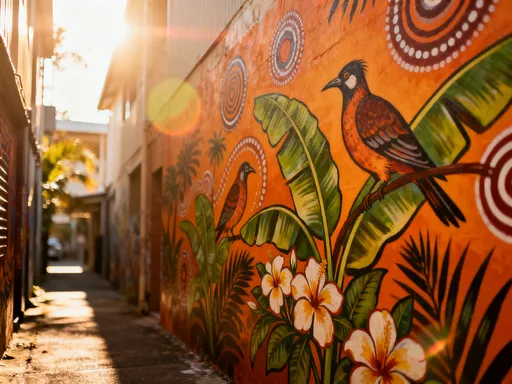
Street murals, though not as widespread as in some European cities, add subtle bursts of color and meaning. One notable piece, painted on the side of a residential building near the city walls, depicts a stylized olive tree with roots shaped like hands. It’s a quiet tribute to resilience and connection, created by a local artist as part of a community project. Unlike commercial graffiti, this work was developed in consultation with neighbors and carries a message of unity rather than rebellion. It’s easy to miss if you’re rushing, but worth pausing for.
Even the architecture contributes to the artistic atmosphere. Stone carvings on doorways, wrought-iron balconies with intricate patterns, and the way light filters through arched windows all serve as silent forms of expression. During evening events, these elements are often highlighted with soft lighting or integrated into performances—live music paired with projected visuals, or dance pieces choreographed to respond to the acoustics of a vaulted hall. These moments blur the line between environment and art, creating immersive experiences that linger in memory long after the visit.
Spontaneity plays a big role, too. You might come across a violinist playing in a sunlit courtyard, surrounded by paintings leaning against the wall, each for sale at a modest price. Or a group of students sketching the cathedral from different angles, sharing tips and laughter. These unplanned encounters often feel more genuine than any scheduled tour. They remind us that art isn’t just something to be consumed—it’s a practice, a conversation, a way of seeing the world.
Why Supporting Local Artists Matters—And How to Do It Right
Behind every authentic art space in Kotor is a person—or a family—dedicated to preserving and evolving cultural expression. These artists often work in relative obscurity, balancing creative passion with economic reality. Tourism brings both opportunity and risk. On one hand, it provides a market for their work. On the other, it can encourage commodification, pushing artists to produce what sells rather than what speaks. The difference between appreciation and exploitation is often a matter of intention.
Supporting local artists isn’t just about buying a souvenir. It’s about recognizing their labor, their vision, and their role in sustaining cultural identity. Even a small purchase—a hand-painted postcard, a ceramic pendant, a signed sketch—can make a meaningful difference. Better yet, take the time to learn the artist’s name, ask about their journey, and share their work with others. A simple social media mention, with proper credit, can amplify their reach far beyond Kotor’s walls.
For those who don’t buy, engagement still matters. A thoughtful question, a genuine compliment, or even just spending time in a studio shows respect. Artists remember these moments. They remind them that their work is seen, valued, and connected to people. In a world where mass production dominates, these human connections are rare and precious.
Traveling with intention means looking beyond the surface. In Kotor, the most breathtaking view isn’t always the bay at sunset—it’s the face of an artist who shares their story with you. The real masterpiece isn’t hanging on the wall. It’s the moment of understanding that passes between strangers, the silent acknowledgment that beauty is made, not found. When we seek out authentic art, we don’t just enrich our journey—we help keep creativity alive in the places we visit.